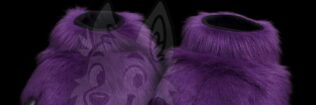
The furry fandom today is a vibrant, global subculture with millions of participants who create art, stories, costumes (fursuits), and online personas centered around anthropomorphic animals—creatures with human-like intelligence, speech, emotions, and often bipedal bodies. But who actually “invented” furries? The short answer: no one person did. The fandom wasn’t patented, trademarked, or launched by a single visionary like how Steve Jobs revolutionized personal computing or J.K. Rowling birthed the wizarding world.
Instead, the modern furry fandom emerged organically in the late 1970s and crystallized in the 1980s as a distinct community within broader science fiction, fantasy, and comic fandom circles—primarily in the United States. It built on centuries of cultural fascination with talking, human-like animals, accelerated by mass media cartoons, underground comics, and the rise of fan conventions and amateur publishing.
This article traces the deep historical roots, the pivotal 1980s moments, key individuals who helped shape it, the coining of the term “furry,” and how the community grew into what we recognize today.
Ancient and Pre-Modern Roots: Anthropomorphism as Human Nature
The concept of blending human and animal traits—anthropomorphism—predates recorded history. It’s a fundamental part of how humans make sense of the world.
- One of the oldest known artifacts is the Löwenmensch figurine (Lion Man), carved from mammoth ivory around 35,000–40,000 years ago in what is now Germany. This 30-cm statue depicts a humanoid figure with a lion’s head, suggesting early shamanistic or mythological beliefs where humans could embody or commune with animal spirits.
- In prehistoric cave art (e.g., the famous “Sorcerer” figure at Les Trois-Frères in France, circa 13,000 BCE), half-human, half-animal beings appear—often with antlers, hooves, or tails—likely representing ritual transformation or spirit guides.
- Ancient civilizations formalized this: Egyptian gods like Anubis (jackal-headed guardian of the dead), Bastet (cat goddess), Horus (falcon-headed sky god), and Thoth (ibis-headed god of wisdom) dominated religion and art for millennia. These weren’t cute cartoon characters but divine beings with animal heads on human bodies.
- Greek mythology gave us hybrids like centaurs, satyrs, and the minotaur, while fables (Aesop’s tales, circa 600 BCE) used talking animals to teach morals.
- Medieval Europe featured the Reynard the Fox cycle (12th–13th centuries), satirical stories of cunning anthropomorphic animals in a feudal society. Heraldry used lions, eagles, and dragons as symbolic human traits.
- By the 19th century, children’s literature exploded with talking animals: Lewis Carroll’s Alice’s Adventures in Wonderland (1865) with the White Rabbit and Cheshire Cat; Beatrix Potter’s Peter Rabbit series (starting 1902); Kenneth Grahame’s The Wind in the Willows (1908).
These examples show anthropomorphic animals as a timeless storytelling tool, but they lacked an organized fan community, conventions, or shared identity.
20th-Century Media Explosion: From Disney to Underground Comics
The direct precursors to furry fandom came through 20th-century popular culture.
- 1928: Walt Disney introduces Mickey Mouse, followed by Donald Duck, Goofy, and others. Disney’s “funny animals” dominated animation for decades.
- 1930s–1950s: Warner Bros.’ Looney Tunes (Bugs Bunny, Daffy Duck) and Hanna-Barbera cartoons popularized slapstick anthropomorphic characters.
- 1960s–1970s: Underground comix brought adult-oriented takes—Robert Crumb’s Fritz the Cat (1965–1972) was explicitly satirical and sexual, later adapted into an X-rated film (1972).
- Disney’s Robin Hood (1973), with its fully anthropomorphic fox Robin, lion Prince John, and bear Little John in a romantic adventure, is frequently cited by early furries as a formative influence.
Science fiction literature and magazines also featured “uplifted” animals or animal aliens (e.g., Cordwainer Smith’s “Underpeople” or H. Beam Piper’s Little Fuzzy, 1962).
By the 1970s, sci-fi conventions (cons) had informal gatherings of fans who enjoyed “funny animal” or anthropomorphic characters, setting the stage for something more organized.
The 1980s: The Birth of an Organized Fandom
The shift from casual appreciation to self-identified subculture happened in California’s Bay Area and Southern California sci-fi scene.
- Late 1970s: At conventions like BayCon and Westercon, small groups discussed anthropomorphic characters seriously—beyond Disney cuteness, into sci-fi, fantasy, and mature themes.
- 1980: A key moment, according to fandom historian Fred Patten, occurred at a science fiction convention. Artist Steve Gallacci shared artwork from his upcoming comic Albedo Anthropomorphics. Unlike cartoon slapstick, Albedo (first issue 1985) featured serious, militaristic anthropomorphic animals (cats, foxes) in a gritty sci-fi war story. This resonated deeply with fans seeking non-childish anthro narratives.
- 1980–1983: Fans connected through Amateur Press Associations (APAs) like Vootie (focused on funny animals) and others. Stories, art, and discussions circulated via mail.
- 1983: The term “furry” emerged in these APAs to describe fans of anthropomorphic animals or the characters themselves. It referred to “furry characters” or the growing group of enthusiasts—distinct from general cartoon fans. (Not derived from sexual connotations initially, though adult content appeared early as in many fandoms.)
- Mid-1980s: Furry-themed room parties at sci-fi cons grew. Early online spaces (BBS systems, CompuServe) and text-based MUDs/MUCKs allowed role-playing as animal characters—furries were early adopters of virtual worlds.
No single “inventor” exists here; it was collaborative. Steve Gallacci’s Albedo is often called the first modern “furry comic” for its serious tone. Fred Patten documented and promoted the scene through writings and editing (e.g., Rowrbrazzle APA).
1989: ConFurence – The Fandom Goes Official
The defining milestone came in January 1989 with ConFurence Zero (later retroactively ConFurence 1), organized by Mark Merlino and Rod O’Riley in Costa Mesa, California. About 60–70 attendees gathered for panels, art shows, and socializing dedicated solely to anthropomorphic interests. This was the first convention exclusively for what we now call furries.
- ConFurence grew rapidly in the 1990s.
- Anthrocon launched in 1997 (now the world’s largest, drawing 10,000+ attendees).
- Online platforms like FurryMUCK (1990) became central hubs.
Debunking Myths and Modern Growth
Common misconceptions:
- “Furries were invented by Disney” — Disney inspired many, but the fandom sought more adult, diverse stories.
- “It started purely as a sexual thing” — Sexuality exists (as in most fandoms), but origins were art, stories, and community.
- “One person created it” — Collective grassroots effort over years.
Today, estimates suggest hundreds of thousands to over 2 million furries worldwide. Conventions are massive; fursonas (personal animal avatars), fursuiting, digital art commissions, and virtual worlds define the culture. The fandom pioneered many internet norms: avatar culture, online commissions, and inclusive communities.
Conclusion
The furry fandom has no inventor because it wasn’t invented—it evolved. From prehistoric cave art to Egyptian gods, medieval fables, Disney cartoons, 1980s sci-fi zines, and the first ConFurence, it’s the result of humanity’s enduring love for imagining animals with human hearts, minds, and societies.
Key catalysts—Steve Gallacci’s groundbreaking comic, Fred Patten’s historical work, Mark Merlino and Rod O’Riley’s convention organizing—helped name and formalize it, but the credit belongs to thousands of fans who connected over shared passion.
In the end, furries weren’t invented by anyone; they were discovered, celebrated, and built together.